Showing posts with label advice. Show all posts

Monday, October 15, 2007

Rook's Rudimentary Resources - Yasser Seirawan "Winning Chess Series"

This is not necessarily a recommendation (or even a review), I'm listing it simply as a resource to be explored.

This series was first brought to my attention by Greg over at Greg's Chess Progress. Greg has used several books in the series to improve his game, and having moved on to more advanced things and through a very magnanimous gesture - Thanks, Greg! - sent me several books in the series he no longer had a use for.

From what I can gather about the series, they were first published by Microsoft Press as four volume set and then later expanded to six volumes. Eventually the series was picked up by Everyman Chess and they currently publish the entire series. Everyman says the Winning Chess Series is "probably the best-selling series of chess books ever published." It certainly seems to be a comprehensive series, starting from the very basics with volume one Play Winning Chess and from there covering tactics, strategies, openings, endgames, and combinations.

So far, I have only been able to read a single chapter, chapter one entitled "Early Days" in the Winning Chess Openings book. It was great fun to read! I actually laughed out loud while reading it because, in the example games he gives, I saw myself doing the same things he did (and millions of other beginners have done) when they first learn how to play the opening. Not only were the games amusing they were very educational - thanks to the insightful comments by Mr. Seirawan. If the rest of the material is up to this quality I expect this series to be very good. As I work through the books I hope to give full reviews of each. That's going to takes some time though ;-) For what it's worth, I noticed the customer review’s at Amazon were uniformly high – 4 to 5 stars – for all seven volumes!

Here is a detailed list of the series (including the back cover summaries):

Winning Chess Series by Yasser Seirawan

  1. Play Winning Chess - An introduction to chess and some basic strategies. "In this first of a four part series, Seirawan talks to the chess novice. He explains the game's development and basics of play, sharing stories of some of the wild and wonderful characters from chess history and Seirawan's own experiences. The language is simple and nontechnical enough for the greenest newcomer, who will hardly seem green at all after absorbing the lessons of this terrific introduction to chess."
    Microsoft Press 1990, 1998
  2. Winning Chess Tactics - An introduction to tactics with puzzles. "This is the second in Seirawan's four volumes, taking the reader from the very basics of chess through appreciation of advanced play. He does a remarkable job of discussing tactics that usually appear only in books for advanced players and communicating them to anyone with a grasp of playing fundamentals. The first part of the book deals with basic tactics and how they can be used individually and in combination. In the second part, Seirawan introduces some of the great chess tacticians and their games, further illustrating tactics as they work out in real-life play. "
    Microsoft Press 1992, 1998
  3. Winning Chess Strategies - A book on how to use small advantages and use strategies to make them. "This is the third of Seirawan's four-volume series, which takes the reader from chess greenhorn to a player advanced enough to understand grandmaster play. Here, Seirawan shows how to set long-range goals for a game and systematically gain a superior position. His deft explanations give anyone with basic chess knowledge (covered in his previous books) the insights to leap levels in play. As usual, he tackles the subject with an infectious enthusiasm, communicating the sporting thrill as each piece of a meticulous plan comes together. Throughout the book, engrossing chess puzzles help teach strategic points."
    Microsoft Press 1994, 1998
  4. Winning Chess Brilliancies - Notable games in chess that are analyzed by the author. "Seirawan does more than present 12 of the most brilliant grandmaster games of the past 25 years. His lively move-by-move analysis delves into the minds of many of chess's greatest players, explaining the reasoning (or errors) behind each. Readers with a grasp of chess basics, tactics, and strategies (covered in the first three books of Seirawan's four-book series) will come away with an appreciation of the subtleties of grandmaster play and the inspiration to stretch their skills and understanding to higher levels. Have another chess player nearby when you read it--you'll want to play afterwards."
    Microsoft Press 1995, 1998
  5. Winning Chess Openings - Gives a brief description on hundreds of the most popular openings, as well as opening strategies. "The two greatest challenges for beginning chess players are not only to survive the openings phase, but also to choose appropriate attack and defense formations in the process. Winning Chess Openings shows you how to do both. In Yasser Seirawan's entertaining, easy-to-follow style, you're shown formations that can be used with other White or Black pieces. Winning Chess Openings explains how to: build a safe house for a king; estimate losses of ten moves or fewer; utilize the elements: time, force, space and pawn structure; plan strategy based on time-tested opening principles; employ a defense for Black against any White opening; apply an opening for White used by World Champions."
    Microsoft Press 1998
  6. Winning Chess Endings - Introduction to the endgame. "Good books about endgames for beginners are few and far between. Winning Chess Endings is a great one - a gripping introduction to what you need to know to win chess endings, taught by American Grandmaster Yasser Seirawan. His entertaining, easy-to-understand style, incisive stories and insiders advice will help you develop a solid grasp of proven principles that you can apply with confidence whenever a game goes the distance. You'll learn to prevail time and again in endgames with common and uncommon combinations and pieces. Winning Chess Endings explains how to: relentlessly find checkmates, from easy to hard, in all basic endgame patterns; master the intricacies of King and Pawn Endings; win consistently in the most common endgame - the Rook ending; master the pros and cons of Bishop vs. Knight Endgames; seize the advantage in Rook Pawn and Queen Pawn endings; play like a grandmaster in solitaire endings."
    Microsoft Press 1999
  7. Winning Chess Combinations - Teaches players how to recognize the main combination patterns; somewhat of a follow up to Winning Chess Tactics. "Winning Chess Combinations is a unique work that doesn't merely repeat the wonderfully rich and vast numbers of combinations, asking readers to solve a particular diagrammed position; it is a work that is far more realistic. A combination involves a sacrifice upsetting the balance of forces, but will it work or tragically boomerang? The reader is invited to solve this critical question by identifying the advantages that a specific position holds which might make the combination successful."
    Everyman 2006

Monday, September 24, 2007

Rook's Rudimentary Resources - Correct Pronunciation of Chess Words

If you are new to chess you will start building a new vocabulary pretty quickly consisting not only of new terms but also names of famous chess players. Don't get in the bad habit of mispronouncing these words - learn how to pronounce them correctly from the start.

Fortunately there are some good resources to help you with correct pronunciation. For the more common chess terms you can visit the Merriam-Webster on-line dictionary site. At their site you can listen to correct pronunciation (and definitions of course) for the following chess terms:

  • en passant
  • en prise
  • j'adoube

Correctly pronouncing the names of famous players presents a slightly more difficult problem - this is especially true when you hear players talk about chess openings. Here's a sampling:

  • Alekhine - pronounced ahl-Yeck-een
  • Giuoco Piano - pronounced Joke-o Pee-Ah-no
  • Najdorf - pronounced NIGH-dorf
  • Pirc - pronounced Peerts

For an exhaustive list see Pronounce that Chess Word by Bill Wall

And these last two are just plain fun to say:

  • Zugzwang (TSOOKS-vahng) position in which the move makes a worse result
  • Zwischenzug (TSVEYE-shun-tsook) in-between move

Finally, we have this excerpt of a poem from the Edinburgh University Chess Club:

A rather funny poem appeared in Chess Review in 1949 entitled "Pronunciation." Some excerpts:

Oh! she is the Tarrasch
Of this parish.
Tartakover
Is her
lover,
and Ragozin
is her cousin.

Will she, will she
Always Flohr me?
Will she never Phil-adore
me?
Will she never
Care a damn bit
For my Center
Counter
Gambit?

I will have to pull my neck in
For she dotes upon Alekhin.
I will have
to pull my oar in
For she dotes upon Tchigorin!

Yes --
An' what of
Kotov?

The full text may be found in "The Treasury of Chess Lore" by Fred Reinfeld.

Monday, September 17, 2007

Rook's Rudimentary Resources - Bobby Fischer Teaches Chess

Bobby Fischer Teaches Chess has gotten a lot of criticism, from complaints that it was "ghost written" (i.e. Margulies and Mosenfelder wrote it while Bobby just lent his name) to condemnation that this book doesn't really teach you chess. I don't disagree - both these criticisms are well taken - and yet I still think it is ONE of the best books to read for the absolute chess novice.

Without an understanding of checkmate, most beginner's lose track of the ultimate object of the game and aimlessly move their pieces around or gleefully try to capture ever piece within range. Reading this book, after having learned how the pieces move, will help focus a new player on the real goal of the game - the ultimate checkmate of the opponent's king.

So let's be clear about this. If you are looking for a single book that "teaches chess" this is NOT it. This book does not even TOUCH on the subjects of algebraic notation or opening principles or simple endgame positions. If you already know a bit about chess and what checkmate is and how to do it, again, this book is NOT for you. However, if you have JUST learned how the pieces move, and you need to understand ultimate the object of the game - checkmate and how it is achieved - THIS IS the book for you.

The book really should be titled Bobby Fischer Teaches Checkmate. This would be an accurate title that would squelch the main (and truthful) criticism of the book - that it fails to teach you all you need to know to play chess. But it does do a great job of making sure you understand what checkmate is and how it is accomplished. You also learn some of the basic tactics - pins and forks and the like - that are put to use in the process of giving checkmate.

So learn how the pieces move first and then, with the aid of this excellent book, learn the goal of the game. Once you have done that, you can then proceed to learn more of the basics with a general purpose instructional book on chess. More on those books later...

Thursday, September 13, 2007

Rook's Recommendations - Chess Tactics Server


No one will argue that a mastery of chess tactics is essential to improving your game. So one of my goals is to set aside time each day to practice tactics (see Chess Improvement Plan - Part One: Goals).

There are many chess puzzle books and chess tactic computer programs you can buy, but before spending too much money on those, Rook recommends (as always) looking for the most bang for your buck - and better yet - not parting with those bucks at all. Which brings us to today's recommendation: The fabulous (and free!) Chess Tactics Server website.

By working through the problems you establish a rating to track your progress and with 23,803 (!) tactical chess problems to solve ranging from novice to Master level you're not going to run out of challenges any time soon. The site registration is free so don't hesitate to try it out. With great Internet chess resources like this, improving your game has never been so easy - or so cheap ;-)

Wednesday, September 12, 2007

Rave - WorldChessLinks.net


I just came across a chess web site today and thought it was so good it required immediate mention:

WorldChessLinks.net - "Best collection of chess links and free chess online resources."

That tag line is no lie! This is a very clean and uncluttered site collecting together links to some of the best chess sites on the web. Links are superbly organized into the following categories:
  • Online Chess Where playing online chess is possible and what are the best graphic interfaces to connect free of charge or to payment to the best worldwide chess servers.

  • Chess Programs The best freeware programs and commercial ones to play chess, databases, graphic interfaces and chess engines, game viewers, utilities and much other.

  • Theory Selection of the best traceable sites in net which propose free of charge changing analyses of the openings and the single ones, of the middle and endgame.

  • Chess Games Database Our runable archive of matches drawn by the greater chess events worldwide, recent and past, consultable online or free of charge in pgn format.

  • Online Databases Online chess databases, national databases, game collections of many of the best players and tournaments.

  • Chess Archeology Historical analysis of the writers, players and chess schools of the last centuries.

  • Chess Links Collection, regularly up-to-date, of the best links for connecting to the leading and the most interesting chess sites of the web.

  • Chess Books A comprehensive review of chess books and magazines of the leading publishing houses that are specialized in this sector.

The Chess Books section is how I arrived at the site. It is incredible - it is organized by publisher, and then within each publisher books are listed according to subject matter and even by ECO opening classifications! If you are looking for a chess book on a particular topic I can think of no better place to begin.

And the chess goodness at this site doesn't end there - each section is meticulously organized by subject and thoroughly documented with summary comments. This site is SO GOOD I'd pay money for it! Wait - you can. Using PayPal you can make a contribution to the site (PayPal recipient: infotiscali@worldchesslinks.net). I think I'll do just that - you should too!

Rook gives this 5 out of 5 stars - you must check this site out! Why have I not heard about it before this?

Monday, September 10, 2007

Rook's Rudimentary Resources - Online Chess Databases

"Chess is an aesthetic experience – the more you understand, the more you enjoy the beauty of this game."

One of the best ways to appreciate the "aesthetic experience" AND improve at chess is by studying the games of great players. Here are several FREE Internet chess database collections which will give you a wealth of great chess games to explore:

  • ChessGames.com. ChessGames.com is a web-based chess database and community. It contains over 400,000 searchable chess games and offers daily features, such as a "Game of the Day" and a "Puzzle of the Day", taken from games in the database. There is also a "Premium Membership" ($25 annually) which adds access to numerous features including a "Guess-the-Move" chess training tool and the Opening Explorer, Endgame Explorer, and Sacrifice Explorer.
  • ChessLab.com. A collection of "two million interactive chess games online (1485 - 2006)" which you can search and analyze online. Also included is a puzzle section which includes things like "find mate in 2" and "find the best move."
  • ChessBase Online. This is a high quality database of 2.4 million unannotated chess games that is kept updated with new and historic games on a weekly basis.
  • NICBase Online. Sponsored by New in Chess, this online database features "over 1.25 million chess games." Online consists of 4 major functions: Searching for a game, Classifying a game, Browsing through NIC-Key Tree, and Viewing a game.
  • MonRoi World Databank of Chess Free database of recent tournament games.

If you have a PGN file viewer or a chess database program for managing games (e.g. ChessBase or Chess Assitant) you can also download complete collections of chess games in a PGN file format to your PC. For more recent games, Convetka has a good collection here.

Thursday, September 06, 2007

Rook Recommends - Chessmaster 10

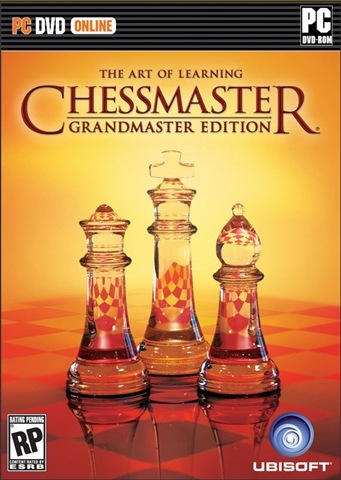
Chessmaster Grandmaster Edition NEWS FLASH! Two new versions of Chessmaster are on their way in October 2007 (the current version, Chessmaster 10, was released in 2004 - so we're long over due for an update). They are Chessmaster: Grandmaster Edition for Windows PC and Chessmaster: The Art of Learning for the Nintendo DS.


Some highlights of the new edition:

  • PC Version on DVD - presumably to facilitate the large chess instruction video files presented by Josh Waitzkin
  • Annotated Famous Games: Players have access to 900 of the most important chess games, which are analyzed to provide key tactics
  • An Additional Chess Game Database of 600,000 games
  • Chess Variants:
    • Dark Chess, in which the opponent’s pieces are invisible
    • Extinction Chess, where the winner is the first player to capture all of the opponent’s pieces
    • Losing Chess, a game that rewards the first player to lose all of his/her pieces!
  • 6 "Mini Games"
    • Minefield, in which chess pieces are used to locate mines hidden in the board
    • Breaking the Lines, where the knight is moved to capture all of the pawns
    • Fork My Fruit, a game that uses chess pieces to fork fruit of the same kind
  • Wireless Play - The Nintendo DS version features wireless play with other DS owners

...Now back to Rook's Recommendations for Raising Ratings:

Today in our Thursday series, Rook takes a look at Chessmaster 10.

For only $20 (here at Amazon.com) it's hard not to recommend this program. There are plenty of other chess playing programs Fritz, Hiarcs, Junior, Shredder, but it would be a mistake to turn down one's nose at this consumer product - especially if you are novice.

Now, I'm not a fan of playing chess against the computer (see Why I Hate Playing Computer Chess!) so my reason for recommending Chessmaster is mostly for it's educational value. In particular you get the following useful tools:

  • Chessmaster Academy: Josh Waitzkin's Academy. This is the featured (and largest) tutorial.
  • Chessmaster Academy: Larry Christiansen Attacking Chess. Annotated games of "classic chess battles."
  • Chessmaster Academy: Chessmaster Series. Some of the many topics:
    • Beginning Strategy by Yasser Seirawan
    • Opening Moves by Bruce Pandolfini
    • Basic Themes by Bruce Pandolfini
    • Larry Evans Endgame Quiz
    • Diagnostic Rating Exam by Bruce Pandolfini
    • Match the Masters by Bruce Pandolfini
    • John Nunn's Favorite Puzzles
  • Opening Practice

Many of the introductory lesson are narrated. This is especially useful to new or younger players as they hear the correct pronunciations of terms like en passant, FIDE, Ruy Lopez, etc. I could have used that kind of help when I was a kid as I had no adult chess players to learn from.

Of course, you can play chess with this program too - both against the computer and online - although I would recommend other online chess playing sites like the ICC or FICS over what Chessmaster offers.

All-in-all, I think this is the best $20 a novice could spend on chess software.

NOTE: If you look at the average review rating at Amazon you might think this was only an average program with a 3-star rating. However, the reason for the low score is primarily due to the obnoxious copy-protection the original release had (weed out the reviews complaining about that and the program is more like a 4 or 5 star rating) Fortunately, Ubisoft has redeemed themselves by removing the copy-protection when you install the latest patch for the game.

Monday, September 03, 2007

Rook's Rudimentary Resources - Chess Score Sheets

In the 2nd installment of our series, Rook's Rudimentary Resources, we look at score sheets. Yes, the humble chess score sheet.

Earlier I mentioned (Advice for the Chess Novice - Improve Your Game for Free! ) that in order to improve your chess it is essential to record all your games. If you're playing at your computer or over the Internet it's likely your moves are already being recorded - if not make sure you turn on that feature. When playing Internet chess at the ICC for example, you can configure both the Blitzin and the Dasher software to log all your games to a PGN file or even have them e-mailed to you after each game.

But if you really want form a good habit, and improve your chess at the same time, try recording your games using paper-and-pencil even though you are at the computer. There are several good reason for this because it will help you:

  • Learn notation better (or faster if a beginner)
  • Re-enforce good habits for over-the-board (OTB) play
  • Force you to play just a little bit slower (which is a good thing)
  • Allow you to remember and learn from your game better.
    Studies show the more of your senses you involve in an activity the better you learn - there's a whole book written about this which you can read about in my blog entry entitled Keep Your Brain Alive

As for actual over-the-board play, with all the technology today, you'd think there'd be alternative methods developed for recording our moves -- and you'd be right. The problem is, unless you've recently won the lottery, you're not going to be able to afford the MonRoi Personal Chess Manager at $360, or even more extravagantly, never worry about recording a game ever again with the $700 DGT Projects - DGT Electronic Chessboard. BTW, Santa, if you ever win the lottery and you are feeling generous, Rook will gladly take one of these for playing his games on the ICC ;-)

In the meantime, you'll need to record your games the old-fashioned way - using paper and pencil. You can purchase bound score sheet pads (Google "Chess Supplies" or "Chess Tournament Supplies") or find plenty of free ones for downloading (Google "Chess Score Sheets"). If you have trouble finding one, here's a simple paper-saving one from ChessAssistance.com you can download as a PDF format and print out (requires the free Adobe Acrobat Reader required).

There was a time when you could buy chess score notebooks with refillable pages. These were great - you could rearrange the pages or insert dividers to help organize your games. Sadly I'm not aware of anyone making them anymore.

I've saved the best option for last - and the one I think offers the best benefit all-around: individual 5" x 8" carbonless copies score sheets. You can find them at The United States Chess Federation store at a reasonable price of $11.95 for 200 sheets.

OK, these are used for tournaments, why would I use them to record my own personal games? Here, I think, are two very compelling reasons.

First, since they are individual pages you can rearrange them anyway you like. Buy yourself a 5' x 8" three-ringer binder and a hole-punch and your set to go.

It's the second reason, though, that makes it really compelling - the carbonless copy. The second copy can be very valuable - not necessarily to you but to your opponent. Here's why:

  • If you are playing somebody who is into chess (like you) they are probably recording there games too. However, since we all seem to be prone to making score sheet mistakes it's great if you can compare your score sheet with that of your opponent. That's where that carbonless copy comes in - just hand it to them and they are set.
  • If you are playing someone new to chess, chances are they are not recording the moves of their game. Chances are too that you are also trying to sell them on the fun and benefits of chess. So when the game is over you hand them the carbonless copy. Of course, it might look like Greek to them, but you've given them something that just might spark an interest in chess. Sure they might throw it away, they might hang on to for awhile and then throw it away, or they might actually keep it, and maybe someday, be curious enough about the game of chess and that mysterious piece of paper you gave them to actually learn the game and to eventually decipher that mysterious score sheet. If they do ever do that and take up chess that score sheet might even be something they treasure.


Thursday, August 30, 2007

Advice for the Chess Novice - Improve Your Game for Free!

In today's Thursday series, Rook's Recommendations for Raising Ratings, I'm going to suggest you save some cash (at least for now) by taking some free advice rather than spending your money on all the enticing chess books, videos, software, and paid services (like hiring a chess coach or enrolling in an on-line tutorial subscription service) out there.

So here are three things you can do to improve your game that won't cost a penny:

1. Play Chess! My first recommendation is the most obvious -but surprisingly often overlooked. Play chess. Play more chess. Play everyday. Like a musician learning to play an instrument, without regular practice you are not going to be very good. Fortunately we live in the age of the Internet, so finding an opponent to play (for free) is a piece of cake. Read Starting out with Online Chess Play to get started. And don't forget the Internet is not the only place to play - there are other excellent options: Where to Play Chess : Introduction. And don't make excuses for not playing chess.

2. Record All Your Games Assuming you have learned chess notation, you should be recording all your games. It's important to learn from your mistakes - you need to be able analyze your games in order to determine what you did right or what you did wrong. The other great reason to record all your games is that you'll be able to revisit them years later so you can appreciate just how much you have improved or to wistfully reflect on that win over your opponent who was rated 300 points higher than you.

3. Use the free chess resources on the web. There is a mind-boggling amount of chess improvement stuff on the Internet, which you can easily find using a Google search. Finding chess resources is not the problem- picking a few select sites to begin with is (Rook Van Winkle's Chess Blog being a given, of course). Start with these three chess sites and explore them thoroughly before going further afield looking for all the other wonderful and useful chess improvement sites out there:
  • Mark Week's About Chess. If you are totally new to chess begin with the "Essentials" section (top left) or better yet, click here to start directly at the beginner's page. Next step, proceed to the Improve Your Game Section.
  • Novice Nook. After you have a little experience under your belt it's time to head off to Dan Heisman's "Novice Nook" site. Again, there is the ever present danger of being overwhelmed with too much of a good thing. Fortunately Dan addresses this problem with his First NNs to Read - a list, in chronological order, of the first 12 Novice Nook columns to read.
  • ChessVideos.TV. Register at this site and get some free video training, starting with the Beginner's section. There's no easier way to learn than watching.

Tuesday, August 28, 2007

Chess as Played in the Real World - No. 3

In our last installment I featured a short "skittles" game I played with Judy in which I was checkmated in 8 moves (Chess as Played in the Real World - No. 2). We played four games that day, and it is only fair to include the last game we played - which she won! If you're a novice player, I'm sure you will relate to a game like the one below - where "defeat is snatched from the jaws of victory." Play through the game - and then see the advice at the bottom:


Some comments:

  • I'm pretty sure 6. Bxf7+ is unsound, but I'm playing my opponent and not the board (bad!) and I figure it will be interesting to see what this accomplishes - if anything (bad again!) - I need to take the time to think through all the ramifications.
  • 15. Re6. Wanting to pressure the defending rook (or exchange it away), I foolishly miss the fact that the c8 Bishop is attacking the e6 square too! Argh!
  • 17. Bf5. Not even looking at the danger the rook poses. Well, I deserve what I got.

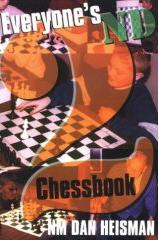
There are several lesson to be learned from this game - each of which Dan Heisman addresses in his remarkable book “Everyone’s 2nd Chess Book”:

  • Think and take your time! Dan Heisman calls this "Guideline Zero" because "all other guidelines are useless if you don't follow this one!" So true.
  • "Think with your head, not with your hands."
  • Before each move make sure ALL your pieces are safe (including the king!) Duh!
What's really embarrassing is, that although I have learned these rules, I stupidly insist on "flunking out" and repeating the lesson ad infinitum. You'd think someone of my age would play a little bit better than an 8-year old and learn from experience :-)
Note: Dan Heisman is the host of the ICC’s radio show “Ask the Renaissance Man”, writes the “Novice Nook” column at ChessCafe.com, and is a Full-Time chess Instructor, and is the author of 8 chess books. If you are a novice player, visit some of the links above. You really should take advantage of Dan Heisman's expert advice aimed directly at the chess novice.
Look for the next installment of the series Chess as Played in the Real World each Tuesday.

Monday, August 27, 2007

Rook's Rudimentary Resources - ChessVideos.tv


Josh Specht called my attention to his excellent ChessVideos.TV site back in February of this year (at that time it was called ChessVideos.com). What is ChessVideos.TV, you ask? Josh explains:

ChessVideos.TV is a community driven site where anybody can record and upload and videos of themselves playing chess or analyzing games. Of course, our resident chess expert, Josh Specht is always there to provide his expert analysis whether in the forum or through his videos.

Did I mention everything on the site is FREE! All you need to do is register for access to the discussion forums and from there you can view the entire collection of videos - which are organized into the following categories:

  • Beginner's Videos

  • Int/Advanced Videos

  • Game Analysis Videos

  • Endgame Lesson Videos

  • Chess Puzzle Videos
In the realms of education (I'm a former teacher) we had the saying "Tell me I forget, show me I remember, involve me I understand." Well, the "show me" part is definitely here, but what's even better is the "involve me" part is also present thanks to this neat little twist:

Our secret is to embed the videos directly in the forum, so you can conveniently view and discuss the videos at the same time!

There is a lot of interesting stuff here. Of course, the quality of the material varies quite a bit (both the presentation and the information) but this is to be expected given the "community' nature of the site. Even so, you are bound to find some items that will not only entertain you, but educate you at the same time. With the recently added live "chat room" and the ability to search for a particular video the site keeps getting better.

In addition to the videos, you'll also find a "puzzle of the day" and a set of very useful chess blogging tools:


  • Puzzle of the Day - An interactive chess puzzle (you can make the moves right on the board). Currently, there are over 100 "Past Puzzles of the Day" you can also try.

  • Diagram Generator - Simply set up the pieces on the board (or generate them from FEN) to create a Chess Diagram which you can add to your blog (the resulting chess diagram is hosted on the ChessVideos.tv server and you then link to it).

  • Game Replayer - Paste your PGN chess game into the text box and your are given a link to play back your game using their replayer, or you can post the game in their forums, or you can grab some code to display the game on your blog or website (Like the diagrams, the games are hosted on their servers permanently - the won't be deleted unless you ask.)

  • Puzzle Creator - Uses a wizard to set up and generate a chess puzzle - complete with hints. You can replay the puzzle from their link or grab the code to use in your blog or website.

  • Qoute of the Day - "Every day we will pick a new chess quote, which you can insert right into your web page or blog. Inserting it is simple and every day it will update automatically with a fresh quote!" Cool - I'm using it now - look in the upper left of this blog page.
Overall, because of the usefullness of this site and that fact that it is free, I would rate ChessVideos.TV a definite 4-out-of-4 stars!

Look for the next installment of the series Rook's Rudimentary Resources each Monday.

Thursday, August 23, 2007

Chess Blogging in Search of Improvement

Today's entry in my weekly series, Rook's Recommendations for Raising Ratings, concerns using one of the best resources on the web for improving your game - personal chess improvement blogs.

When I decided to get back into chess last year, naturally I searched the Internet to find advice on how to improve my game. Lucky for me I came across this:

The Chess Of Edwin ‘dutchdefence’ Meyer
Checks, captures, threats, combinations… Weblog of an amateur chess player determined to improve.

Part of the appeal Edwin Meyer's website was that he, like me, was taking on the task of improving his game later in his life - having first learned to play chess between the age of 29 and 30.

I read several of his blog entries. They were really interesting and very helpful - so helpful in fact that I went back to his very first entry (and to his original blog And Then There Was Chess) and read everything from the beginning!

There was (and is) a tremendous amount of useful information at both his blogs. I can give it no higher recommendation than to say it served as an inspiration for my own.

Since then I have come across several other excellent personal improvement chess blogs. Here are some other great ones:


  • Begin Chess - A beginner's journey into the complex world of chess... A superbly designed and organized web site - everything is categorized so it is easy to explore a topic of interest. Like Edwin Meyer's blog, this was one of the first to catch my eye - since the writer of it is on a journey very similar to that of yours truly, Rook Van Winkle. If you too have decided it's time to give chess a try I think you'll find a lot of interesting reading here and lots links to good information.

  • Confessions of a Chess Novice - Chess is too serious to enjoy, and too frivolous to take seriously. Eric Thomson is a member of the Knights Errant, a group of chess enthusiasts blogging about their quest to improve at the game. He started playing chess in 2005 and says "After six weeks of playing chess, I entered a tournament in Raleigh, North Carolina and lost 3/4 games, ending up with a provisional rating of 900. That puts me in the F class, which is the bottom 10% of all rated chess players." Form there Eric chronicles his chess improvement with an astounding amount of thoughtful and very useful chess improvement material that could keep you occupied for weeks!

  • Steve Learns Chess - Never enough time, but trying to improve my chess game anyway! Steve Eddins says "I’m a borderline class C / D player with a USCF rating fluctuating around 1400. I’m an adult player who’s trying to study and improve my game in between devoting time to my family and my job." That sounds familiar to must of us! This is a good blog to visit once your chess improvement plan is under way to see what life is like in the trenches.

  • SquirrelChess.com - A journey into the world of chess. Squirrel says "This website is about learning to play chess, random things I discover on the long way to chess mastery, and the game of chess itself." Another must see site with all kinds of content: articles, reviews, annotated games, a chess glossary, and more.

  • Chess Tales - Chess, chess players and tournaments worldwide, online and in the media. Roger, by his own admission is "probably quite a good player" and there is a lot of interesting material on his site. In particular, for advice on improving your chess, start with his Chess Improvement Tips

    Finally, although not a personal chess blog, I want to end this post with an absolutely essential resource for the chess novice:

  • Dan Heisman's Chess Page. Dan is a National Master, full-time chess instructor, hosts a regular chess broadcast as "Phillytutor" on the Internet Chess Club and (best of all) is the award-winning Novice Nook columnist over at the Chess Cafe. Whew! I've mentioned Dan before in my blog (here and here) and I cannot recommend highly enough the fabulous advice he has for the chess beginner and novice.


I'll end with this bit of advice: "When in the same boat we should all pull together." :-) Thanks to the great chess improvement blogs out there, we are "pulling together"!

Tuesday, August 21, 2007

Chess as Played in the Real World - No. 2

I've been encouraging Judy to take up the game of chess, and ocassionally I can get her to play a game or two with me. Below is an amusing little game we played in June. I know I should go gentle on her but the killer instinct is too strong :-) To see the first entry in this series go here.

[Event "Skittles Game"]
[Site "Home"]
[Date "2007.06.21"]
[Round "1"]
[White "Judy"]
[Black "RookVanWinkle"]
[Result "0-1"]
[Opening "Tennison (Lemberg, Zukertort) gambit"]
[ECO "B01"]
[NIC "VO.17"]

1. e4 d5 2. Nf3 dxe4 3. Nh4 e5 4. d3 Qxh4 5. dxe4 Bc5 6. Qd5 Qxf2+ 7. Kd1Bg4+ 8. Be2 Qxe2#


Thursday, August 16, 2007

Play "Cooperative Chess" at Work


I was certain that the game of chess would be mentioned in the excellent book Keep Your Brain Alive - 83 Neurobic Exercises to help prevent memory loss and increase mental fitness by Dr. Lawrence C. Katz and Manning Rubin. (You can read my blog entry about the book here: Rook Van Winkle's Chess Blog: Keep Your Brain Alive)

Sure enough, on page 83 they recommend using an "ongoing chess game" at work as one of their exercises for "preserving and enhancing the brain's capabilities into the senior years."

Basically the idea is to set up a chess game near the water cooler (or some other public place were co-workers gather) "where an employee can come to the board, assess the situation, and make a move."

Although this doesn't allow for the development of long term strategies, according to the authors of the book:

... It does require visual-spatial thinking that is different from what most of us do at work. The brief gear switching provides a break from verbal, left-brain activities and lets the 'working brain' take a breather."

I think this is a fantastic idea! You will need some method to indicate whether it is white's or black's turn to play.

Why not use this as a great way to get a chess club started at your work? It would certainly attract the attention of any chess playing co-workers, and the novelty of the 'shared game" might even spark some interest among your non-chess playing co-workers - perhaps they might even want to take up the game themselves?

Monday, July 30, 2007

Learn to Play Chess (and Practice Basic Checkmates!) for Free on the Internet


Here is a great free service offered by Chess Magnet School in conjunction with the U.S. Chess Federation and sponsoring chess coaches. Using this website you can "learn to play chess according to the official rules, to play against the computer, and to practice your checkmates."

Here are the details courtesy of the United States Chess Federation (USCF) website:

Learn to Play Chess Interactively!

In conjunction with the USCF, Chess Magnet School is offering an interactive program to teach you chess. Practice until you're good enough to play a real game! Discounts for more advanced chessmagnetschool programs are also avaliable for USCF members. Learn the Rules of Chess on chessmagnetschool.com.

Note: "Rules of Chess" requires Java 1.3 or above. Be patient- It may take a full minute to load. If you get a white screen, visit Java.com and upgrade your version of Java (which is free), and/or check your browser settings to make sure Java is enabled.

Also be sure to check out (pun intentional) the USCF's "New to Chess" section for more great information on learning about the "Game of Kings."

Monday, February 05, 2007

Chess as Played in the Real World - No. 1

A new year and a new beginning. Rook Van Winkle has fallen asleep here for a couple months distracted by some persistent health issues. But the game is far from over - even if my "opponent" is up a minor piece or a passed pawn or two! Time to play harder still! With that as my call to action I will attempt to pick up where I left off with a little annotated game (the first I've played since November 2006). It is not a great game or anything - but it does illustrate chess "as it is played" in the real world by those such as myself:

Looking at it now, this game shows how recklessly White (me) played the game. I'll add some comments and diagrams soon. Playing Black is my younger sister - who has not played chess in 25 years - but does very well!


Opening "(ECO: C21) Center Game: Maróczy"
White "James M. (Rook Van Winkle)"
Black: "Heather M."

[Event "Family Skittles Game"]
[Site "MSN Chess"]
[Date "2007.01.01"]
[Round "1"]
[White "RookVanWinkle"]
[Black "Heather"]
[Result "1-0"]
[Opening "King's pawn game"]
[ECO "C21"]
[NIC "KP.10"]

1. e4 e5 2. d4 d6 3. d5 Be7 4. Nf3 Bg4 5. Bb5+ Nd7 6. O-O Nh6 7. Qd2 O-O 8.Ng5 Bxg5 9. Qxg5 Nf6 10. f3 a6 11. fxg4 axb5 12. h4 Nhxg4 13. h5 h6 14. Qf5 Qd7 15. Bxh6 gxh6 16. Nd2 Rad8 17. Rf3 b4 18. Rg3 Qb5 19. Rxg4+ Nxg4 20.Qxg4+ Kh8 21. Rf1 Qc5+ 22. Kh2 Qxc2 23. Rf6 Rd7 24. Rxh6#{White mates} 1-0


Tuesday, November 28, 2006

Knight-time Practice

These two free on-line computer "knight" games were mentioned at Susan Polgar's magnificent chess blog. Personally, I can't really play them for more than a minute or two because of some painful RSI conditions, but from what I have seen of them they look like fun and could actually help your children (or yourself for that matter) learn to move and more effectively use the knight in an actual game of chess. I suspect they are also highly addictive - so you've been warned.

Crazy Chess - Chess comes to life, in this original, highly addictive real-time chess game by 2DPlay. Play as the White Knight, engaged in a fierce battle of skill against the dreaded army of Black Pawns. Defend your castle against their merciless onslaught by moving in the knight's 'L' move to kill the pawns. But here's where it gets a gazillion times more exciting - it's not turn-based! Move your Knight as fast as you can, across the board, taking out the black pawns and halting their attack march towards your castle. There are also some really neat power-ups of speed, stealth, freeze and destruction to name a few. This is a game like no other - it's Crazy Chess!

Play here at www.2dPlay.com or from Susan's original link at www.filebomb.com play here.


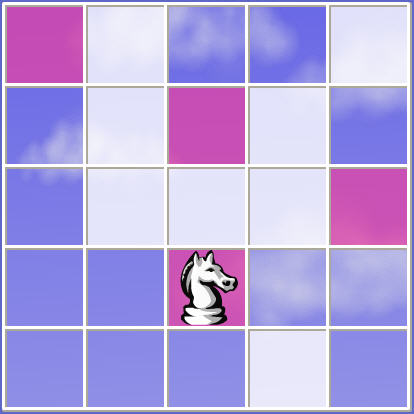
Troyis - The Chess Knight Puzzle Game. Welcome to Troyis, probably the most original and addictive puzzle game since Tetris! The funniest way to train your brain in minutes a day! How to play: Paint all the white cells on the board as quickly as possible, by way of the chess knight movement rule (L-shape). The faster you are, the more points and better world ranking you will get. Easy to start, but difficult to master...

USA TODAY from United States says: This clever online game utilizes the knight's movement from chess. It sounds simple; trust us on that and we'll let you figure out for yourself that it's also insanely addictive. — AG

Play here at http://www.troyis.com.

Tuesday, October 17, 2006

Chess Improvement Plan - Part Two: Taking Inventory

The Complete Chess Course by Fred Reinfeld. My very first chess book - which I purchased around 1969 or 1970 (as detailed in my post My Early Days with Chess). My original edition long since fell apart - quite literally - all the pages came loose as the glue in the binding cracked. For some reason I kept "Book One - The Basic Rules of Chess" - I still have that chapter stapled together. The rest of the book was eventually discarded. For nostalgia's sake, I went ahead and purchased the current Doubleday edition from Amazon. (The cover jacket illustrated here is the one I remember - which an Internet image search kindly revealed.)

I don't believe I ever got beyond book five or six. But I am enjoying reading it again - amazingly I still remember some of the example games - rather remarkable considering I last read the book in the 1970's! I'm comfortable with the old "descriptive notation" the book uses (1. P-K4 P-QB4 etc.) but it would be nice to have an algebraic edition.

I'm sure they're better books available today - but there is still a lot of good stuff here.

Sunday, September 17, 2006

Chess Improvement Plan - Part One: Goals

Chess: The cerebral frontier. These are the voyages of the patzer, Rook Van Winkle. His never ending mission to explore the strange world of chess, to seek out new tactics and odd openings, to boldly move where no pawn or piece has gone before...

I was just working on a brief statement defining my overall goal in undertaking my chess improvement plan and somehow Star Trek popped into my mind.

But now let me be serious. My "About Me" section describes why I have gotten back into chess after all these years - so I won't repeat that. What I need is a simple statement describing why I want to become a better chess player.

Ultimate Goal: To become a better chess player in order to enjoy the game better.

I don't want to set any artificial goals such as a) I will become an Expert Level Player before I die, or b) I will win 75% of all the games I play, or c) I will complete 5000 tactical problems in five minutes.

The better I am and the more I know about chess the better I will a) appreciate my games and the games of others (amateur and master alike) b) grasp the nuances of the openings, middle, and end games and c) derive satisfaction from every hard fought well-played game that I play - win or lose.

Obviously, concerning item c), the stronger I am as a chess player the more likely I can offer myself and my opponent a hard fought well-played game :-)

My Specific Goals:

These are based mainly on recommendations by Dan Heisman, Susan Polgar's advice to Emily Liu at Emily's Chess Blog, and other suggestions I've come across from other chess player's chronicling their own chess improvement plans.

  1. Play at least one game of chess per day.
  2. Improve my knowledge and utilization of chess tactics and set aside time each day to practice those tactics - even if only 15 minutes per day to start.
  3. Pick one opening to specialize with when playing white and learn it well.
  4. Learn two good openings as black to use against 1.e4 and 1.d4.
  5. Improve my understanding of endgame positions.
  6. Improve my understanding of middle game strategies.
  7. Improve my time management during a game, i.e. slow down and make the most use of the time allocated.
  8. Learn not to always recklessly attack but to play defensively when the situation requires it. (This is a particularly bothersome deficiency of mine)
  9. Annotate my own games immediately after playing them – especially my losses in order to learn from my mistakes
  10. Get more practice at recording my moves in algebraic notation.
  11. Get more practice playing games with a chess clock.
  12. Observe some annotated games of the top rated players.

Some possible additional long term goals :

  1. Have a basic recognition of all the major openings by name, their first few defining moves, and the resulting board positions or "tabiyas".
  2. Become familiar with some of the classic games of the "masters" past and present.
  3. Read (and hopefully learn from) some of the classic books on chess.
  4. Teach other novices, kids and adults, the basic of playing chess.

That ends my initial list of goals - although I may come back to them later to add, delete, or re-order them.

Tuesday, September 12, 2006

Chess D-Day - An Improvement Plan

On June 6th of this year I played a game of chess. I can mark that as the day that Rook Van Winkle awoke from his 25-year chess slumber.

It is now fourteen weeks later. Since then I’ve played maybe a 150 or so games (mostly on the Internet), participated in one OTB beginner’s tournament and successfully competed in my first Internet chess tournament.
But now it is time for me to stop procrastinating and to begin in earnest a “chess improvement” plan.
Before I proceed, I need to mention the number one thing I have learned about improving at chess. Play chess. Play more chess. Play even more chess. In an earlier post I complained that chess was being played better today than it was 25 years ago (What Happened to the Woodpushers?). I still think that is true. The amazing thing though is how much better I am playing just by playing. I’ve not really done any serious reading or study or practice. Just through hard earned experience (winning and losing) I am getting better.

Sidebar - To be honest, I also have to give some credit here to Dan Heisman. He is the host of the ICC’s radio show “Ask the Renaissance Man”, writes the “Novice Nook” column at ChessCafe.com, and is the author of the remarkable book “Everyone’s 2nd Chess Book”. So far I have only perused his book (I’ll write a full review of it once I’ve read it all). By following the list of guidelines in his book I’ve seen a tremendous improvement in my game. Thank you, Dan Heisman. Take this advice: If you are a chess novice or a low rated experienced player you must really buy this book. You will not regret it.

As a former teacher, I know the importance of a curriculum. My very first step then is to design my personal chess curriculum. To begin, I need to complete some tasks. For now I will simply list these tasks. Later I will follow up on each of them with more detailed posts:
  1. Define my goals. What is it that I personally want to accomplish with my chess improvement plan? How will I measure my progress?

  2. List of the chess resources I already have and those I may wish to add:

    • Books I already own
    • Books I may wish to purchase
    • Software I already own
    • Software I might wish to purchase
    • Helpful Internet resources I can use
    • My chess history – what score sheets and PGN records of my games do I have?
  3. Plan an agenda using selected resources from my list.

  4. Implement a schedule for study and game playing.

  5. Follow through conscientiously with my plan and see what
    happens.