Showing posts with label Improvement Plan. Show all posts

Monday, September 10, 2007

Rook's Rudimentary Resources - Online Chess Databases

"Chess is an aesthetic experience – the more you understand, the more you enjoy the beauty of this game."

One of the best ways to appreciate the "aesthetic experience" AND improve at chess is by studying the games of great players. Here are several FREE Internet chess database collections which will give you a wealth of great chess games to explore:

  • ChessGames.com. ChessGames.com is a web-based chess database and community. It contains over 400,000 searchable chess games and offers daily features, such as a "Game of the Day" and a "Puzzle of the Day", taken from games in the database. There is also a "Premium Membership" ($25 annually) which adds access to numerous features including a "Guess-the-Move" chess training tool and the Opening Explorer, Endgame Explorer, and Sacrifice Explorer.
  • ChessLab.com. A collection of "two million interactive chess games online (1485 - 2006)" which you can search and analyze online. Also included is a puzzle section which includes things like "find mate in 2" and "find the best move."
  • ChessBase Online. This is a high quality database of 2.4 million unannotated chess games that is kept updated with new and historic games on a weekly basis.
  • NICBase Online. Sponsored by New in Chess, this online database features "over 1.25 million chess games." Online consists of 4 major functions: Searching for a game, Classifying a game, Browsing through NIC-Key Tree, and Viewing a game.
  • MonRoi World Databank of Chess Free database of recent tournament games.

If you have a PGN file viewer or a chess database program for managing games (e.g. ChessBase or Chess Assitant) you can also download complete collections of chess games in a PGN file format to your PC. For more recent games, Convetka has a good collection here.

Monday, September 03, 2007

Rook's Rudimentary Resources - Chess Score Sheets

In the 2nd installment of our series, Rook's Rudimentary Resources, we look at score sheets. Yes, the humble chess score sheet.

Earlier I mentioned (Advice for the Chess Novice - Improve Your Game for Free! ) that in order to improve your chess it is essential to record all your games. If you're playing at your computer or over the Internet it's likely your moves are already being recorded - if not make sure you turn on that feature. When playing Internet chess at the ICC for example, you can configure both the Blitzin and the Dasher software to log all your games to a PGN file or even have them e-mailed to you after each game.

But if you really want form a good habit, and improve your chess at the same time, try recording your games using paper-and-pencil even though you are at the computer. There are several good reason for this because it will help you:

  • Learn notation better (or faster if a beginner)
  • Re-enforce good habits for over-the-board (OTB) play
  • Force you to play just a little bit slower (which is a good thing)
  • Allow you to remember and learn from your game better.
    Studies show the more of your senses you involve in an activity the better you learn - there's a whole book written about this which you can read about in my blog entry entitled Keep Your Brain Alive

As for actual over-the-board play, with all the technology today, you'd think there'd be alternative methods developed for recording our moves -- and you'd be right. The problem is, unless you've recently won the lottery, you're not going to be able to afford the MonRoi Personal Chess Manager at $360, or even more extravagantly, never worry about recording a game ever again with the $700 DGT Projects - DGT Electronic Chessboard. BTW, Santa, if you ever win the lottery and you are feeling generous, Rook will gladly take one of these for playing his games on the ICC ;-)

In the meantime, you'll need to record your games the old-fashioned way - using paper and pencil. You can purchase bound score sheet pads (Google "Chess Supplies" or "Chess Tournament Supplies") or find plenty of free ones for downloading (Google "Chess Score Sheets"). If you have trouble finding one, here's a simple paper-saving one from ChessAssistance.com you can download as a PDF format and print out (requires the free Adobe Acrobat Reader required).

There was a time when you could buy chess score notebooks with refillable pages. These were great - you could rearrange the pages or insert dividers to help organize your games. Sadly I'm not aware of anyone making them anymore.

I've saved the best option for last - and the one I think offers the best benefit all-around: individual 5" x 8" carbonless copies score sheets. You can find them at The United States Chess Federation store at a reasonable price of $11.95 for 200 sheets.

OK, these are used for tournaments, why would I use them to record my own personal games? Here, I think, are two very compelling reasons.

First, since they are individual pages you can rearrange them anyway you like. Buy yourself a 5' x 8" three-ringer binder and a hole-punch and your set to go.

It's the second reason, though, that makes it really compelling - the carbonless copy. The second copy can be very valuable - not necessarily to you but to your opponent. Here's why:

  • If you are playing somebody who is into chess (like you) they are probably recording there games too. However, since we all seem to be prone to making score sheet mistakes it's great if you can compare your score sheet with that of your opponent. That's where that carbonless copy comes in - just hand it to them and they are set.
  • If you are playing someone new to chess, chances are they are not recording the moves of their game. Chances are too that you are also trying to sell them on the fun and benefits of chess. So when the game is over you hand them the carbonless copy. Of course, it might look like Greek to them, but you've given them something that just might spark an interest in chess. Sure they might throw it away, they might hang on to for awhile and then throw it away, or they might actually keep it, and maybe someday, be curious enough about the game of chess and that mysterious piece of paper you gave them to actually learn the game and to eventually decipher that mysterious score sheet. If they do ever do that and take up chess that score sheet might even be something they treasure.


Tuesday, October 17, 2006

Chess Improvement Plan - Part Two: Taking Inventory

The Complete Chess Course by Fred Reinfeld. My very first chess book - which I purchased around 1969 or 1970 (as detailed in my post My Early Days with Chess). My original edition long since fell apart - quite literally - all the pages came loose as the glue in the binding cracked. For some reason I kept "Book One - The Basic Rules of Chess" - I still have that chapter stapled together. The rest of the book was eventually discarded. For nostalgia's sake, I went ahead and purchased the current Doubleday edition from Amazon. (The cover jacket illustrated here is the one I remember - which an Internet image search kindly revealed.)

I don't believe I ever got beyond book five or six. But I am enjoying reading it again - amazingly I still remember some of the example games - rather remarkable considering I last read the book in the 1970's! I'm comfortable with the old "descriptive notation" the book uses (1. P-K4 P-QB4 etc.) but it would be nice to have an algebraic edition.

I'm sure they're better books available today - but there is still a lot of good stuff here.

Sunday, September 17, 2006

Chess Improvement Plan - Part One: Goals

Chess: The cerebral frontier. These are the voyages of the patzer, Rook Van Winkle. His never ending mission to explore the strange world of chess, to seek out new tactics and odd openings, to boldly move where no pawn or piece has gone before...

I was just working on a brief statement defining my overall goal in undertaking my chess improvement plan and somehow Star Trek popped into my mind.

But now let me be serious. My "About Me" section describes why I have gotten back into chess after all these years - so I won't repeat that. What I need is a simple statement describing why I want to become a better chess player.

Ultimate Goal: To become a better chess player in order to enjoy the game better.

I don't want to set any artificial goals such as a) I will become an Expert Level Player before I die, or b) I will win 75% of all the games I play, or c) I will complete 5000 tactical problems in five minutes.

The better I am and the more I know about chess the better I will a) appreciate my games and the games of others (amateur and master alike) b) grasp the nuances of the openings, middle, and end games and c) derive satisfaction from every hard fought well-played game that I play - win or lose.

Obviously, concerning item c), the stronger I am as a chess player the more likely I can offer myself and my opponent a hard fought well-played game :-)

My Specific Goals:

These are based mainly on recommendations by Dan Heisman, Susan Polgar's advice to Emily Liu at Emily's Chess Blog, and other suggestions I've come across from other chess player's chronicling their own chess improvement plans.

  1. Play at least one game of chess per day.
  2. Improve my knowledge and utilization of chess tactics and set aside time each day to practice those tactics - even if only 15 minutes per day to start.
  3. Pick one opening to specialize with when playing white and learn it well.
  4. Learn two good openings as black to use against 1.e4 and 1.d4.
  5. Improve my understanding of endgame positions.
  6. Improve my understanding of middle game strategies.
  7. Improve my time management during a game, i.e. slow down and make the most use of the time allocated.
  8. Learn not to always recklessly attack but to play defensively when the situation requires it. (This is a particularly bothersome deficiency of mine)
  9. Annotate my own games immediately after playing them – especially my losses in order to learn from my mistakes
  10. Get more practice at recording my moves in algebraic notation.
  11. Get more practice playing games with a chess clock.
  12. Observe some annotated games of the top rated players.

Some possible additional long term goals :

  1. Have a basic recognition of all the major openings by name, their first few defining moves, and the resulting board positions or "tabiyas".
  2. Become familiar with some of the classic games of the "masters" past and present.
  3. Read (and hopefully learn from) some of the classic books on chess.
  4. Teach other novices, kids and adults, the basic of playing chess.

That ends my initial list of goals - although I may come back to them later to add, delete, or re-order them.

Tuesday, September 12, 2006

Chess D-Day - An Improvement Plan

On June 6th of this year I played a game of chess. I can mark that as the day that Rook Van Winkle awoke from his 25-year chess slumber.

It is now fourteen weeks later. Since then I’ve played maybe a 150 or so games (mostly on the Internet), participated in one OTB beginner’s tournament and successfully competed in my first Internet chess tournament.
But now it is time for me to stop procrastinating and to begin in earnest a “chess improvement” plan.
Before I proceed, I need to mention the number one thing I have learned about improving at chess. Play chess. Play more chess. Play even more chess. In an earlier post I complained that chess was being played better today than it was 25 years ago (What Happened to the Woodpushers?). I still think that is true. The amazing thing though is how much better I am playing just by playing. I’ve not really done any serious reading or study or practice. Just through hard earned experience (winning and losing) I am getting better.

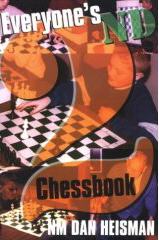
Sidebar - To be honest, I also have to give some credit here to Dan Heisman. He is the host of the ICC’s radio show “Ask the Renaissance Man”, writes the “Novice Nook” column at ChessCafe.com, and is the author of the remarkable book “Everyone’s 2nd Chess Book”. So far I have only perused his book (I’ll write a full review of it once I’ve read it all). By following the list of guidelines in his book I’ve seen a tremendous improvement in my game. Thank you, Dan Heisman. Take this advice: If you are a chess novice or a low rated experienced player you must really buy this book. You will not regret it.

As a former teacher, I know the importance of a curriculum. My very first step then is to design my personal chess curriculum. To begin, I need to complete some tasks. For now I will simply list these tasks. Later I will follow up on each of them with more detailed posts:
  1. Define my goals. What is it that I personally want to accomplish with my chess improvement plan? How will I measure my progress?

  2. List of the chess resources I already have and those I may wish to add:

    • Books I already own
    • Books I may wish to purchase
    • Software I already own
    • Software I might wish to purchase
    • Helpful Internet resources I can use
    • My chess history – what score sheets and PGN records of my games do I have?
  3. Plan an agenda using selected resources from my list.

  4. Implement a schedule for study and game playing.

  5. Follow through conscientiously with my plan and see what
    happens.