Showing posts with label Chess Training. Show all posts

Monday, October 15, 2007

Rook's Rudimentary Resources - Yasser Seirawan "Winning Chess Series"

This is not necessarily a recommendation (or even a review), I'm listing it simply as a resource to be explored.

This series was first brought to my attention by Greg over at Greg's Chess Progress. Greg has used several books in the series to improve his game, and having moved on to more advanced things and through a very magnanimous gesture - Thanks, Greg! - sent me several books in the series he no longer had a use for.

From what I can gather about the series, they were first published by Microsoft Press as four volume set and then later expanded to six volumes. Eventually the series was picked up by Everyman Chess and they currently publish the entire series. Everyman says the Winning Chess Series is "probably the best-selling series of chess books ever published." It certainly seems to be a comprehensive series, starting from the very basics with volume one Play Winning Chess and from there covering tactics, strategies, openings, endgames, and combinations.

So far, I have only been able to read a single chapter, chapter one entitled "Early Days" in the Winning Chess Openings book. It was great fun to read! I actually laughed out loud while reading it because, in the example games he gives, I saw myself doing the same things he did (and millions of other beginners have done) when they first learn how to play the opening. Not only were the games amusing they were very educational - thanks to the insightful comments by Mr. Seirawan. If the rest of the material is up to this quality I expect this series to be very good. As I work through the books I hope to give full reviews of each. That's going to takes some time though ;-) For what it's worth, I noticed the customer review’s at Amazon were uniformly high – 4 to 5 stars – for all seven volumes!

Here is a detailed list of the series (including the back cover summaries):

Winning Chess Series by Yasser Seirawan

  1. Play Winning Chess - An introduction to chess and some basic strategies. "In this first of a four part series, Seirawan talks to the chess novice. He explains the game's development and basics of play, sharing stories of some of the wild and wonderful characters from chess history and Seirawan's own experiences. The language is simple and nontechnical enough for the greenest newcomer, who will hardly seem green at all after absorbing the lessons of this terrific introduction to chess."
    Microsoft Press 1990, 1998
  2. Winning Chess Tactics - An introduction to tactics with puzzles. "This is the second in Seirawan's four volumes, taking the reader from the very basics of chess through appreciation of advanced play. He does a remarkable job of discussing tactics that usually appear only in books for advanced players and communicating them to anyone with a grasp of playing fundamentals. The first part of the book deals with basic tactics and how they can be used individually and in combination. In the second part, Seirawan introduces some of the great chess tacticians and their games, further illustrating tactics as they work out in real-life play. "
    Microsoft Press 1992, 1998
  3. Winning Chess Strategies - A book on how to use small advantages and use strategies to make them. "This is the third of Seirawan's four-volume series, which takes the reader from chess greenhorn to a player advanced enough to understand grandmaster play. Here, Seirawan shows how to set long-range goals for a game and systematically gain a superior position. His deft explanations give anyone with basic chess knowledge (covered in his previous books) the insights to leap levels in play. As usual, he tackles the subject with an infectious enthusiasm, communicating the sporting thrill as each piece of a meticulous plan comes together. Throughout the book, engrossing chess puzzles help teach strategic points."
    Microsoft Press 1994, 1998
  4. Winning Chess Brilliancies - Notable games in chess that are analyzed by the author. "Seirawan does more than present 12 of the most brilliant grandmaster games of the past 25 years. His lively move-by-move analysis delves into the minds of many of chess's greatest players, explaining the reasoning (or errors) behind each. Readers with a grasp of chess basics, tactics, and strategies (covered in the first three books of Seirawan's four-book series) will come away with an appreciation of the subtleties of grandmaster play and the inspiration to stretch their skills and understanding to higher levels. Have another chess player nearby when you read it--you'll want to play afterwards."
    Microsoft Press 1995, 1998
  5. Winning Chess Openings - Gives a brief description on hundreds of the most popular openings, as well as opening strategies. "The two greatest challenges for beginning chess players are not only to survive the openings phase, but also to choose appropriate attack and defense formations in the process. Winning Chess Openings shows you how to do both. In Yasser Seirawan's entertaining, easy-to-follow style, you're shown formations that can be used with other White or Black pieces. Winning Chess Openings explains how to: build a safe house for a king; estimate losses of ten moves or fewer; utilize the elements: time, force, space and pawn structure; plan strategy based on time-tested opening principles; employ a defense for Black against any White opening; apply an opening for White used by World Champions."
    Microsoft Press 1998
  6. Winning Chess Endings - Introduction to the endgame. "Good books about endgames for beginners are few and far between. Winning Chess Endings is a great one - a gripping introduction to what you need to know to win chess endings, taught by American Grandmaster Yasser Seirawan. His entertaining, easy-to-understand style, incisive stories and insiders advice will help you develop a solid grasp of proven principles that you can apply with confidence whenever a game goes the distance. You'll learn to prevail time and again in endgames with common and uncommon combinations and pieces. Winning Chess Endings explains how to: relentlessly find checkmates, from easy to hard, in all basic endgame patterns; master the intricacies of King and Pawn Endings; win consistently in the most common endgame - the Rook ending; master the pros and cons of Bishop vs. Knight Endgames; seize the advantage in Rook Pawn and Queen Pawn endings; play like a grandmaster in solitaire endings."
    Microsoft Press 1999
  7. Winning Chess Combinations - Teaches players how to recognize the main combination patterns; somewhat of a follow up to Winning Chess Tactics. "Winning Chess Combinations is a unique work that doesn't merely repeat the wonderfully rich and vast numbers of combinations, asking readers to solve a particular diagrammed position; it is a work that is far more realistic. A combination involves a sacrifice upsetting the balance of forces, but will it work or tragically boomerang? The reader is invited to solve this critical question by identifying the advantages that a specific position holds which might make the combination successful."
    Everyman 2006

Monday, September 17, 2007

Rook's Rudimentary Resources - Bobby Fischer Teaches Chess

Bobby Fischer Teaches Chess has gotten a lot of criticism, from complaints that it was "ghost written" (i.e. Margulies and Mosenfelder wrote it while Bobby just lent his name) to condemnation that this book doesn't really teach you chess. I don't disagree - both these criticisms are well taken - and yet I still think it is ONE of the best books to read for the absolute chess novice.

Without an understanding of checkmate, most beginner's lose track of the ultimate object of the game and aimlessly move their pieces around or gleefully try to capture ever piece within range. Reading this book, after having learned how the pieces move, will help focus a new player on the real goal of the game - the ultimate checkmate of the opponent's king.

So let's be clear about this. If you are looking for a single book that "teaches chess" this is NOT it. This book does not even TOUCH on the subjects of algebraic notation or opening principles or simple endgame positions. If you already know a bit about chess and what checkmate is and how to do it, again, this book is NOT for you. However, if you have JUST learned how the pieces move, and you need to understand ultimate the object of the game - checkmate and how it is achieved - THIS IS the book for you.

The book really should be titled Bobby Fischer Teaches Checkmate. This would be an accurate title that would squelch the main (and truthful) criticism of the book - that it fails to teach you all you need to know to play chess. But it does do a great job of making sure you understand what checkmate is and how it is accomplished. You also learn some of the basic tactics - pins and forks and the like - that are put to use in the process of giving checkmate.

So learn how the pieces move first and then, with the aid of this excellent book, learn the goal of the game. Once you have done that, you can then proceed to learn more of the basics with a general purpose instructional book on chess. More on those books later...

Thursday, September 13, 2007

Rook's Recommendations - Chess Tactics Server


No one will argue that a mastery of chess tactics is essential to improving your game. So one of my goals is to set aside time each day to practice tactics (see Chess Improvement Plan - Part One: Goals).

There are many chess puzzle books and chess tactic computer programs you can buy, but before spending too much money on those, Rook recommends (as always) looking for the most bang for your buck - and better yet - not parting with those bucks at all. Which brings us to today's recommendation: The fabulous (and free!) Chess Tactics Server website.

By working through the problems you establish a rating to track your progress and with 23,803 (!) tactical chess problems to solve ranging from novice to Master level you're not going to run out of challenges any time soon. The site registration is free so don't hesitate to try it out. With great Internet chess resources like this, improving your game has never been so easy - or so cheap ;-)

Monday, September 10, 2007

Rook's Rudimentary Resources - Online Chess Databases

"Chess is an aesthetic experience – the more you understand, the more you enjoy the beauty of this game."

One of the best ways to appreciate the "aesthetic experience" AND improve at chess is by studying the games of great players. Here are several FREE Internet chess database collections which will give you a wealth of great chess games to explore:

  • ChessGames.com. ChessGames.com is a web-based chess database and community. It contains over 400,000 searchable chess games and offers daily features, such as a "Game of the Day" and a "Puzzle of the Day", taken from games in the database. There is also a "Premium Membership" ($25 annually) which adds access to numerous features including a "Guess-the-Move" chess training tool and the Opening Explorer, Endgame Explorer, and Sacrifice Explorer.
  • ChessLab.com. A collection of "two million interactive chess games online (1485 - 2006)" which you can search and analyze online. Also included is a puzzle section which includes things like "find mate in 2" and "find the best move."
  • ChessBase Online. This is a high quality database of 2.4 million unannotated chess games that is kept updated with new and historic games on a weekly basis.
  • NICBase Online. Sponsored by New in Chess, this online database features "over 1.25 million chess games." Online consists of 4 major functions: Searching for a game, Classifying a game, Browsing through NIC-Key Tree, and Viewing a game.
  • MonRoi World Databank of Chess Free database of recent tournament games.

If you have a PGN file viewer or a chess database program for managing games (e.g. ChessBase or Chess Assitant) you can also download complete collections of chess games in a PGN file format to your PC. For more recent games, Convetka has a good collection here.

Thursday, September 06, 2007

Rook Recommends - Chessmaster 10

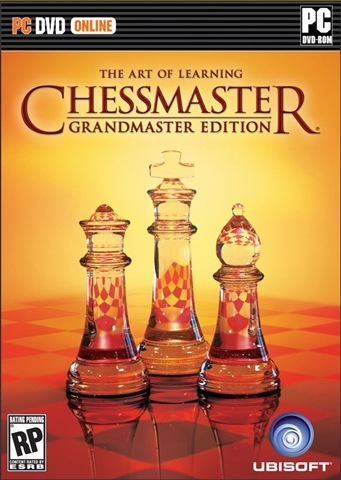
Chessmaster Grandmaster Edition NEWS FLASH! Two new versions of Chessmaster are on their way in October 2007 (the current version, Chessmaster 10, was released in 2004 - so we're long over due for an update). They are Chessmaster: Grandmaster Edition for Windows PC and Chessmaster: The Art of Learning for the Nintendo DS.


Some highlights of the new edition:

  • PC Version on DVD - presumably to facilitate the large chess instruction video files presented by Josh Waitzkin
  • Annotated Famous Games: Players have access to 900 of the most important chess games, which are analyzed to provide key tactics
  • An Additional Chess Game Database of 600,000 games
  • Chess Variants:
    • Dark Chess, in which the opponent’s pieces are invisible
    • Extinction Chess, where the winner is the first player to capture all of the opponent’s pieces
    • Losing Chess, a game that rewards the first player to lose all of his/her pieces!
  • 6 "Mini Games"
    • Minefield, in which chess pieces are used to locate mines hidden in the board
    • Breaking the Lines, where the knight is moved to capture all of the pawns
    • Fork My Fruit, a game that uses chess pieces to fork fruit of the same kind
  • Wireless Play - The Nintendo DS version features wireless play with other DS owners

...Now back to Rook's Recommendations for Raising Ratings:

Today in our Thursday series, Rook takes a look at Chessmaster 10.

For only $20 (here at Amazon.com) it's hard not to recommend this program. There are plenty of other chess playing programs Fritz, Hiarcs, Junior, Shredder, but it would be a mistake to turn down one's nose at this consumer product - especially if you are novice.

Now, I'm not a fan of playing chess against the computer (see Why I Hate Playing Computer Chess!) so my reason for recommending Chessmaster is mostly for it's educational value. In particular you get the following useful tools:

  • Chessmaster Academy: Josh Waitzkin's Academy. This is the featured (and largest) tutorial.
  • Chessmaster Academy: Larry Christiansen Attacking Chess. Annotated games of "classic chess battles."
  • Chessmaster Academy: Chessmaster Series. Some of the many topics:
    • Beginning Strategy by Yasser Seirawan
    • Opening Moves by Bruce Pandolfini
    • Basic Themes by Bruce Pandolfini
    • Larry Evans Endgame Quiz
    • Diagnostic Rating Exam by Bruce Pandolfini
    • Match the Masters by Bruce Pandolfini
    • John Nunn's Favorite Puzzles
  • Opening Practice

Many of the introductory lesson are narrated. This is especially useful to new or younger players as they hear the correct pronunciations of terms like en passant, FIDE, Ruy Lopez, etc. I could have used that kind of help when I was a kid as I had no adult chess players to learn from.

Of course, you can play chess with this program too - both against the computer and online - although I would recommend other online chess playing sites like the ICC or FICS over what Chessmaster offers.

All-in-all, I think this is the best $20 a novice could spend on chess software.

NOTE: If you look at the average review rating at Amazon you might think this was only an average program with a 3-star rating. However, the reason for the low score is primarily due to the obnoxious copy-protection the original release had (weed out the reviews complaining about that and the program is more like a 4 or 5 star rating) Fortunately, Ubisoft has redeemed themselves by removing the copy-protection when you install the latest patch for the game.

Monday, July 30, 2007

Learn to Play Chess (and Practice Basic Checkmates!) for Free on the Internet


Here is a great free service offered by Chess Magnet School in conjunction with the U.S. Chess Federation and sponsoring chess coaches. Using this website you can "learn to play chess according to the official rules, to play against the computer, and to practice your checkmates."

Here are the details courtesy of the United States Chess Federation (USCF) website:

Learn to Play Chess Interactively!

In conjunction with the USCF, Chess Magnet School is offering an interactive program to teach you chess. Practice until you're good enough to play a real game! Discounts for more advanced chessmagnetschool programs are also avaliable for USCF members. Learn the Rules of Chess on chessmagnetschool.com.

Note: "Rules of Chess" requires Java 1.3 or above. Be patient- It may take a full minute to load. If you get a white screen, visit Java.com and upgrade your version of Java (which is free), and/or check your browser settings to make sure Java is enabled.

Also be sure to check out (pun intentional) the USCF's "New to Chess" section for more great information on learning about the "Game of Kings."

Thursday, July 12, 2007

Great New Book - Silman's Complete Endgame Course: From Beginner to Master


If you're a rank amateur like me, you may not even survive long enough to experience the endgame. :-) And if you do, how can you play the endgame well if you rarely get there in the first place?

Perhaps there is finally a solution for the likes of me.

I first heard about this book in an e-mail from Raphael Neff at The Chess House (BTW, I highly recommend Raphael Neff's The Chess House - it's one of the best on-line chess dealers I've had the pleasure of doing business with.)

The e-mail goes on to explain how Raphael's brother Elliot, who develops scholastic chess programs, is so taken with this book that he insists Raphael order and stock it for The Chess House to sell.

Now if that sounds like too much of a clever marketing come-on, you probably had the same initial reaction I did. But after reading Raphael's complete e-mail I was impressed enough to check it out further. So doing a little more research, (Amazon's customer reviews for example), I became convinced this could really be a great book and very much worth having - so much so I've ordered a copy from The Chess House.

In my particular case, two things convinced me to buy the book. First, I don't have a book on endgame instruction and would like to have one, and second, this statement from a customer review of the book:

"[What sets this] book apart from other instructive books, is that this one breaks down the material first according to USCF classes: Beginners, Classes E, D, C, B, A, expert and finally, Master. The Beginner's chapter, for example, is primarily concerned with "overkill" mates such as two rooks plus king vs. king. Class C players get a certain selection of pawn endings, minor piece endings, the Lucena and Philidor positions, and queen vs. advanced pawn. Masters receive examples of "Cat and Mouse," the "Principle of Two Weaknesses," and other more advanced topics. Each chapter builds upon earlier material in a logical and satisfying way, and each concludes with a dozen or two exercises. In this manner the reader can focus on the material that is appropriate for his or her level, and not get overwhelmed by the amount of theory. As that reader progresses along the rating ladder, he or she will then advance to the next chapter. The final chapter is devoted to endgames for pleasure, featuring entertaining and instructive examples from the all-time greats."

Overall, the book scored nearly complete 5-star reviews, except for two 4-star reviews only because of a few typos and other errors in the text (corrections of which are available at Jerry Silman's website.)

UPDATE: Joel Benjamin, over at the USCF site gives the book a very positive review saying:

Silman's Complete Endgame Course offers universal appeal. With a whopping 530 pages, all levels receive significant coverage. Even players who feel themselves beyond the "basics" can feast on the 200 pages of master material. The last chapter, "Endgames for Pure Pleasure," features examples from five all-time great endgame players. Teachers will find plenty of useful positions, or can assign the book to students. Kids and adults will both enjoy this book. Silman's Complete Endgame Course will likely take its place among the classics.

Follow this link to preview and/or order the book.

Tuesday, November 28, 2006

Knight-time Practice

These two free on-line computer "knight" games were mentioned at Susan Polgar's magnificent chess blog. Personally, I can't really play them for more than a minute or two because of some painful RSI conditions, but from what I have seen of them they look like fun and could actually help your children (or yourself for that matter) learn to move and more effectively use the knight in an actual game of chess. I suspect they are also highly addictive - so you've been warned.

Crazy Chess - Chess comes to life, in this original, highly addictive real-time chess game by 2DPlay. Play as the White Knight, engaged in a fierce battle of skill against the dreaded army of Black Pawns. Defend your castle against their merciless onslaught by moving in the knight's 'L' move to kill the pawns. But here's where it gets a gazillion times more exciting - it's not turn-based! Move your Knight as fast as you can, across the board, taking out the black pawns and halting their attack march towards your castle. There are also some really neat power-ups of speed, stealth, freeze and destruction to name a few. This is a game like no other - it's Crazy Chess!

Play here at www.2dPlay.com or from Susan's original link at www.filebomb.com play here.


Troyis - The Chess Knight Puzzle Game. Welcome to Troyis, probably the most original and addictive puzzle game since Tetris! The funniest way to train your brain in minutes a day! How to play: Paint all the white cells on the board as quickly as possible, by way of the chess knight movement rule (L-shape). The faster you are, the more points and better world ranking you will get. Easy to start, but difficult to master...

USA TODAY from United States says: This clever online game utilizes the knight's movement from chess. It sounds simple; trust us on that and we'll let you figure out for yourself that it's also insanely addictive. — AG

Play here at http://www.troyis.com.

Tuesday, October 17, 2006

Chess Improvement Plan - Part Two: Taking Inventory

The Complete Chess Course by Fred Reinfeld. My very first chess book - which I purchased around 1969 or 1970 (as detailed in my post My Early Days with Chess). My original edition long since fell apart - quite literally - all the pages came loose as the glue in the binding cracked. For some reason I kept "Book One - The Basic Rules of Chess" - I still have that chapter stapled together. The rest of the book was eventually discarded. For nostalgia's sake, I went ahead and purchased the current Doubleday edition from Amazon. (The cover jacket illustrated here is the one I remember - which an Internet image search kindly revealed.)

I don't believe I ever got beyond book five or six. But I am enjoying reading it again - amazingly I still remember some of the example games - rather remarkable considering I last read the book in the 1970's! I'm comfortable with the old "descriptive notation" the book uses (1. P-K4 P-QB4 etc.) but it would be nice to have an algebraic edition.

I'm sure they're better books available today - but there is still a lot of good stuff here.

Sunday, September 17, 2006

Chess Improvement Plan - Part One: Goals

Chess: The cerebral frontier. These are the voyages of the patzer, Rook Van Winkle. His never ending mission to explore the strange world of chess, to seek out new tactics and odd openings, to boldly move where no pawn or piece has gone before...

I was just working on a brief statement defining my overall goal in undertaking my chess improvement plan and somehow Star Trek popped into my mind.

But now let me be serious. My "About Me" section describes why I have gotten back into chess after all these years - so I won't repeat that. What I need is a simple statement describing why I want to become a better chess player.

Ultimate Goal: To become a better chess player in order to enjoy the game better.

I don't want to set any artificial goals such as a) I will become an Expert Level Player before I die, or b) I will win 75% of all the games I play, or c) I will complete 5000 tactical problems in five minutes.

The better I am and the more I know about chess the better I will a) appreciate my games and the games of others (amateur and master alike) b) grasp the nuances of the openings, middle, and end games and c) derive satisfaction from every hard fought well-played game that I play - win or lose.

Obviously, concerning item c), the stronger I am as a chess player the more likely I can offer myself and my opponent a hard fought well-played game :-)

My Specific Goals:

These are based mainly on recommendations by Dan Heisman, Susan Polgar's advice to Emily Liu at Emily's Chess Blog, and other suggestions I've come across from other chess player's chronicling their own chess improvement plans.

  1. Play at least one game of chess per day.
  2. Improve my knowledge and utilization of chess tactics and set aside time each day to practice those tactics - even if only 15 minutes per day to start.
  3. Pick one opening to specialize with when playing white and learn it well.
  4. Learn two good openings as black to use against 1.e4 and 1.d4.
  5. Improve my understanding of endgame positions.
  6. Improve my understanding of middle game strategies.
  7. Improve my time management during a game, i.e. slow down and make the most use of the time allocated.
  8. Learn not to always recklessly attack but to play defensively when the situation requires it. (This is a particularly bothersome deficiency of mine)
  9. Annotate my own games immediately after playing them – especially my losses in order to learn from my mistakes
  10. Get more practice at recording my moves in algebraic notation.
  11. Get more practice playing games with a chess clock.
  12. Observe some annotated games of the top rated players.

Some possible additional long term goals :

  1. Have a basic recognition of all the major openings by name, their first few defining moves, and the resulting board positions or "tabiyas".
  2. Become familiar with some of the classic games of the "masters" past and present.
  3. Read (and hopefully learn from) some of the classic books on chess.
  4. Teach other novices, kids and adults, the basic of playing chess.

That ends my initial list of goals - although I may come back to them later to add, delete, or re-order them.

Tuesday, September 12, 2006

Chess D-Day - An Improvement Plan

On June 6th of this year I played a game of chess. I can mark that as the day that Rook Van Winkle awoke from his 25-year chess slumber.

It is now fourteen weeks later. Since then I’ve played maybe a 150 or so games (mostly on the Internet), participated in one OTB beginner’s tournament and successfully competed in my first Internet chess tournament.
But now it is time for me to stop procrastinating and to begin in earnest a “chess improvement” plan.
Before I proceed, I need to mention the number one thing I have learned about improving at chess. Play chess. Play more chess. Play even more chess. In an earlier post I complained that chess was being played better today than it was 25 years ago (What Happened to the Woodpushers?). I still think that is true. The amazing thing though is how much better I am playing just by playing. I’ve not really done any serious reading or study or practice. Just through hard earned experience (winning and losing) I am getting better.

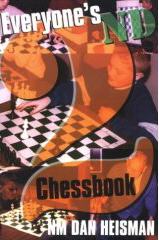
Sidebar - To be honest, I also have to give some credit here to Dan Heisman. He is the host of the ICC’s radio show “Ask the Renaissance Man”, writes the “Novice Nook” column at ChessCafe.com, and is the author of the remarkable book “Everyone’s 2nd Chess Book”. So far I have only perused his book (I’ll write a full review of it once I’ve read it all). By following the list of guidelines in his book I’ve seen a tremendous improvement in my game. Thank you, Dan Heisman. Take this advice: If you are a chess novice or a low rated experienced player you must really buy this book. You will not regret it.

As a former teacher, I know the importance of a curriculum. My very first step then is to design my personal chess curriculum. To begin, I need to complete some tasks. For now I will simply list these tasks. Later I will follow up on each of them with more detailed posts:
  1. Define my goals. What is it that I personally want to accomplish with my chess improvement plan? How will I measure my progress?

  2. List of the chess resources I already have and those I may wish to add:

    • Books I already own
    • Books I may wish to purchase
    • Software I already own
    • Software I might wish to purchase
    • Helpful Internet resources I can use
    • My chess history – what score sheets and PGN records of my games do I have?
  3. Plan an agenda using selected resources from my list.

  4. Implement a schedule for study and game playing.

  5. Follow through conscientiously with my plan and see what
    happens.

Friday, August 25, 2006

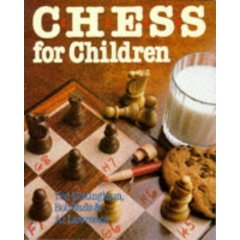
Book Review: Chess for Children

Here is a good book with some great ideas for teaching chess to young and old alike. Although written for children ages 9 to 12, I think its best use is for a teacher or parent wanting to teach a a young child (or anybody for that matter) the game of chess in an easy-to-understand kind of way.

The book succeeds splendidly at this by introducing small “chunks” of chess knowledge. Using a variety of chess game variations, puzzles, and activities, the student gradually learns all the rules of the game in a fun and interesting way.

Take for example “The Pawn Game”. What’s so great about this is that you can begin to play a simplified form of chess having only learned how a single piece moves and captures! Even better, you are actually learning solid chess fundamentals as to how to use pawns in the full game of chess.

In addition to “the Pawn Game” the authors introduce many other “mini” chess activities like the “Attack of the Mad Queen” game and the “Knight Driving Test” challenge.

Because of this approach, learning the rules of chess becomes something fun and not a confusing and overwhelming experience for the new player.

Highly recommended!

Chess for Children (Paperback)


  • by Ted Nottingham, Bob Wade, Al Lawrence
  • Reading level: Ages 9-12
  • Paperback: 128 pages
  • Publisher: Sterling; New Ed edition (June 30, 1996)
  • Language: English
  • ISBN: 0806904534
  • Product Dimensions: 10.0 x 8.0 x 0.4 inches
  • Shipping Weight: 10.88 ounces
  • Average customer review: 4 out of 5 based on 8 reviews

My copy was purchased from http://www.amazon.com/.com re-seller the_book_depository_ltd. To buy from the Amazon listing click this link Used & new then select the "New" tab and you'll see them. Good price - total with shipping from the U.K. was only $13.85. Got it delivered in about 10 days. New and used copies are also available from other re-sellers too.

Wednesday, August 23, 2006

What Happened to the Woodpushers?


Is it just me or are people playing chess a lot better than they did 25 or 30 years ago?

Since I've taken up chess again I've played maybe 50 games over the Internet, first mostly using Chessmaster 10 and lately at the Internet Chess Club (http://www.chessclub.com/). I also played in only my second OTB tournament - an "Unrated Beginner's Open" (my only other tournament experience being another "Unrated Beginners" tournament I played over 25 years ago).

Now I'm not great stuff by any means, but it sure seems like I have to fight a lot harder to win a game nowadays than I used to 25 years ago when I played in the school lunchroom or even in the low key college chess club I ran. And the kids I played in the beginner's tournament were remarkably skilled - I played one 5 year-old in particular that could very well have beaten me!

Chess players seem to be just plain better than they were 25 years ago - at least in terms of beginners, students and casual players.

Why is this? My best theory is younger people (and everyone in general) today have so much more resources for playing and learning the game.

More games...

Thirty years ago I had a heck of a time just finding someone to play chess with. Now you can find thousands of opponents on-line day or night. And if you can't do that you can use any dozens of chess playing software programs.

Side Note: Speaking of chess playing software programs - they are so tough to beat at any setting I think those that persevere beyond the initial novelty of playing against the computer simply must get better or simply give up. I wonder what percentage of Chessmaster buyers immediately put the program aside because of frustration at losing. Let's face it - a computer just can't play like novice even as much as the programmer's try to throw in "human behavior" characteristics.

More Instructional Materials…

For the motivated student of chess there are dozens of excellent training software packages out there - so many I can hardly keep track of them. And they're a lot more engaging than trying to read through a 400 page chess book by a Capablanca or a Nimzovitsch. Years ago the best thing I had as a beginner was the "Bobby Fischer Teaches Chess" book - thanks to a diagram on every page - but that was the closet we came to the likes of the "chess tactics" software packages of today.

More of Everything...

And my goodness - speaking of books, there were a good number of chess books back in the 70's but how many hundreds of thousands can you get now? But that is not the end to it. We have:

  • chess TV (DVDs)
  • chess radio (www.chessfm.com)
  • chess web sites (thousands upon thousands)
  • chess databases (on-line and off-line CD and DVD's)
  • live Internet chess match relays
  • chess coaches (locally and on-line)
  • chess curriculums (for use in the schools)
  • etc., etc.
Good grief!

Information overload for most, but to a motivated player there has never been a time in history were such a wide array of learning resources were so available.

My conclusion is that because of this huge mass of chess material the average player is no longer an average player.

As for me, I'm still trying to work through Fred Reinfeld's "Complete Chess Course" that I purchased at age 10 and still haven't finished :-D